

LORE ENTRY — INDIVIDUAL / BAND Legends of Faerndil | Filed under: Clockworks City Cultural Institutions — Persons and Groups of Notable Influence
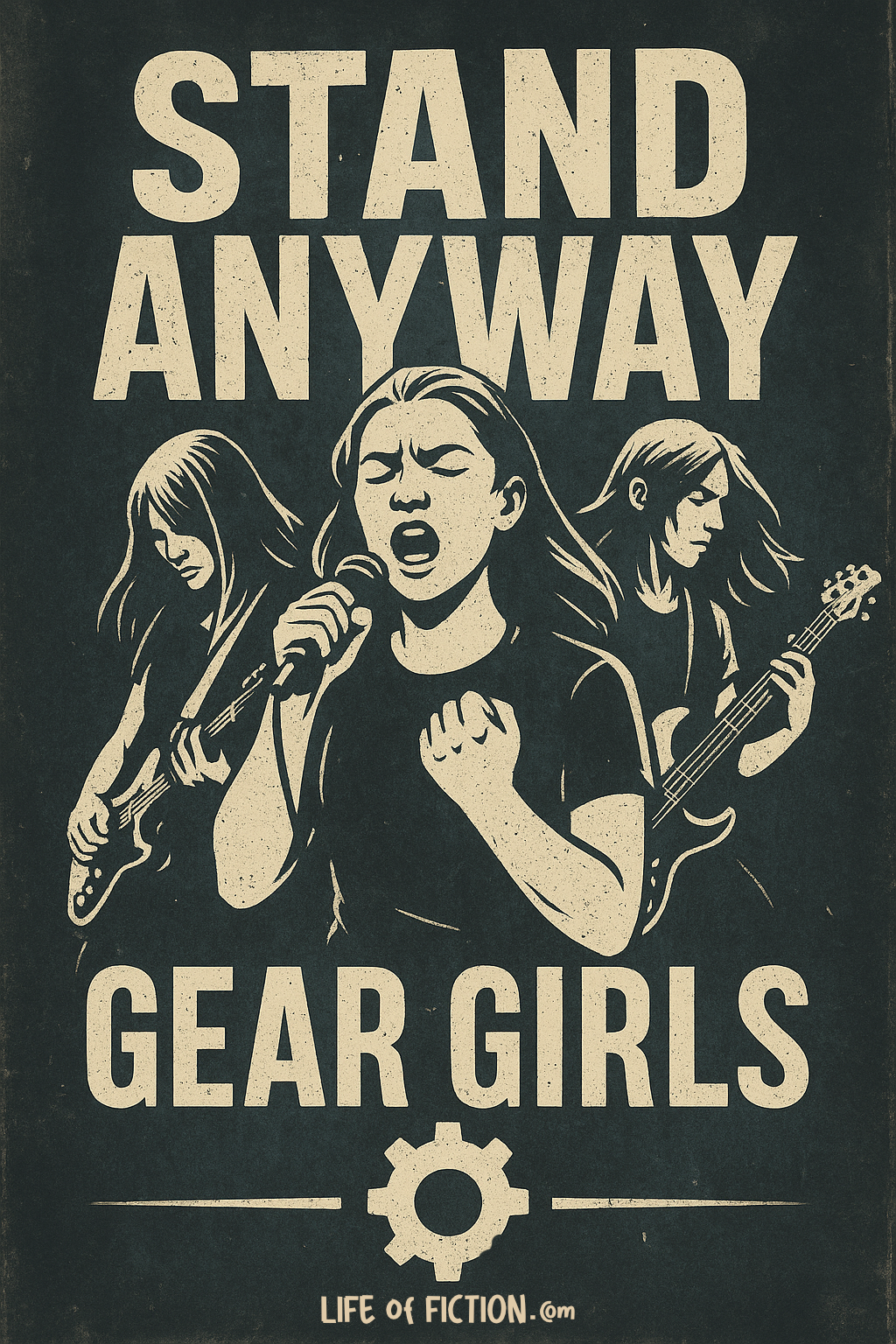
A note before the record begins
I have been a field historian long enough to know that heroes rarely look the way the books describe them. They are rarely armored. They rarely arrive at the right moment with the right words and the right bearing. Most of the heroic acts I have documented were performed by people who were exhausted, frightened, grieving, and deeply uncertain whether anything they did was going to matter.What separated them from everyone else was not courage in the theatrical sense. It was the refusal to go quiet when going quiet would have been easier and safer. By that measure — the only measure I trust — Ezra Gearwinder and GEAR GIRLS are among the most significant figures I have documented in two decades of fieldwork in Clockworks City.
I want that stated clearly, at the top, before anyone mistakes what follows for mere cultural commentary. ~ Höbin Luckyfeller
Origins: the fire before everything
To understand the unstoppable passion of Ezra and her forming the band GEAR GIRLS, you have to understand where they came from.Not the band. The girls.
Ezra Gearwinder, Katt Bolttwist, and Juno Humrunner have been inseparable since age five. This detail sounds warm until you understand the reason: all three lost their parents in the same disaster.
The Great Boiler Explosion...still the third deadliest industrial accident in recorded Clockworks City history...killed more than three thousand gnomes in the Refinery Belt District.
Most were shift workers.
Most left families behind.
The city issued formal condolences, conducted an inquiry, released a report that absolved every relevant official, and moved forward.
The children did not move forward.
They had no one to move forward with.
Ezra, Katt, and Juno ended up in the same district care facility. They became friends out of proximity and necessity and never separated.
The three girls grew up in the Refinery Belt understanding, at a bone-level, what it cost to keep Clockworks City running and who bore that cost.
They played instruments in various states of disrepair.
They wrote songs about the only lives they knew.
This is not background. This is the foundation.
Everything GEAR GIRLS ever created was built on it.
Before the music was a weapon
For several years, all three worked as RATS [Repair And Tactical Support] servicing S.L.A.G.s in the Trench Wars pits. Ezra put in applications and interviewed with dozens of sponsors, pushing until they were picked up by an independent pilot. This pilot, by their account, was in strong form heading into the season. That pilot died under circumstances the official record classified as an 'accident'.Ezra did not believe the official record and publicly challenged the game safety commission. Katt and Juno backed their friend. The girls were dismissed from their positions the same day. No severance, no documentation of cause, and a firmly delivered suggestion that they not discuss the matter further.
With nothing left but each other and the truth no one would let them speak...the girls decided to shout the truth in a format the powerful couldn't shut down.
The band becomes a voice
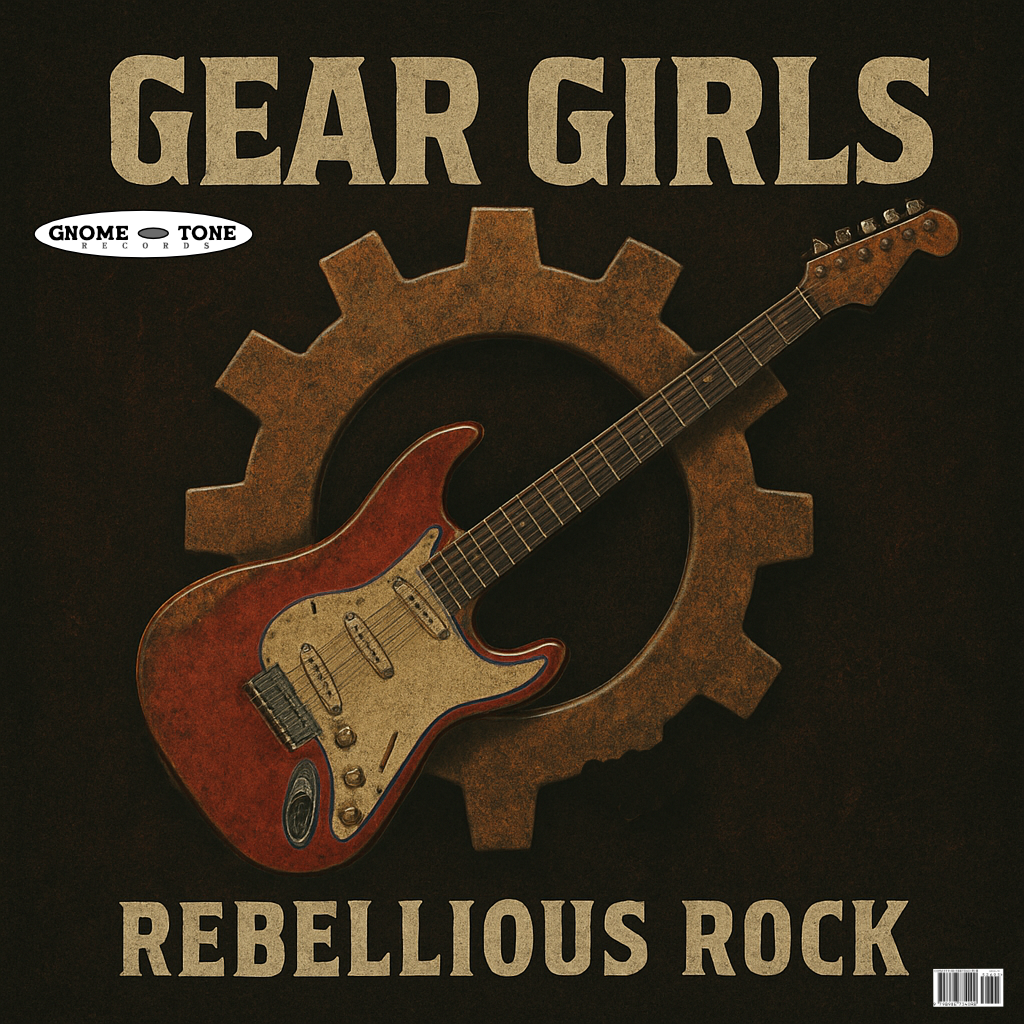
After the dismissal, the hobby became deliberate.
Ezra put her boot in any door that would even consider letting them play. The Refinery Belt was their first real audience...a community that recognized the names Gearwinder, Bolttwist, and Humrunner. Owners knew and understood what those families had given the city. The music spread the way things spread in communities the media doesn't cover: person to person, shift to shift, across factory floors and transit lines and cramped shared apartments.
Their sound went viral with the youth of the District.
[NOTE: all three members are dedicated fans of Alhannah Luckyfeller The first Trench Wars Grand Champion and the only female gnome pilot to hold that title. They had followed her career with the specific reverence lower-district gnomes reserve for anyone who climbs out of the same conditions they were born into. Those who refuse to pretend those conditions don't exist. That reverence would matter later. When Alhannah returned to the games as part of the Steel and Stone team, GEAR GIRLS were already paying attention and already writing.]
Derrin, and the song that broke District hearts
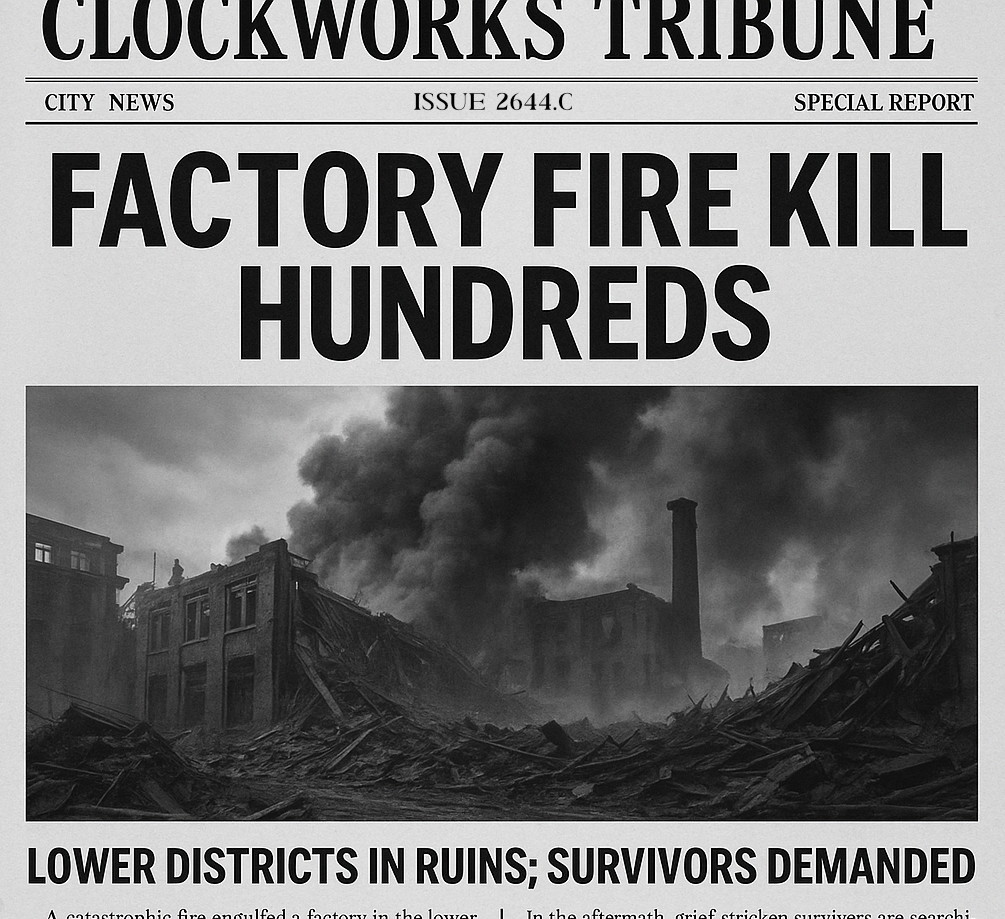
Shift manager of the Bellows factory, Derrin was closest to Ezra Gearwinder. Close, but not yet announced, not yet resolved, not yet said aloud. She had not told him. She did not get the chance.
When the explosion hit, Derrin ran back into the fire, searching for survivors. The evening news named him a hero and covered the story for two days before the cycle moved on.
Ezra wrote "If I Could Tell You" in the first 24 hours that followed. She shared her sorrow openly, telling the truth about loss...the kind that hurts most in what was taken,...and what was never said.
"If I could tell you one more thing — my heart would heal."
That song gave the lower districts permission to mourn. Not to process grief privately, but openly, collectively, as something the community was owed the space to do together. Workers who had lost family in the Bellows explosion recognized themselves in it. So did workers who had lost family in the Great Boiler Explosion decades before and had never been given a public language for what that cost them.
The fact that Ezra allowed herself to be vulnerable moved through Districts 12 through 19 not as a protest...but as a wound finally named.
And once a wound is named, it begins to close differently.
You're Not Alone — the album that changed the city

The Church of TGII filed a second "Public Blasphemy" suit against the band during the album's launch. This charge is typically applied to the defacement of sacred property, not song lyrics, which made the legal filing novel in a scholarly sense and catastrophically counterproductive in every practical sense. The lawsuit increased the band's reach by an order of magnitude, especially after the public learned the album was sold via 'Pay What You Want', with 100% of proceeds going to needy families.
I cannot speak to whether the Church anticipated this. I suspect they did not consult anyone under sixty before filing.
[Readers can find the full album through Gnome-Tone Records™: You're Not Alone — GEAR GIRLS. It's worth your time.]
Ezra told the story of the factory accident through 'Echoes in the Smoke'. Unmediated, without resolution, the way real grief begins. Families rallied around the performer when she shared 'If I Could Tell You' giving that profound grief a face.
But the album did not stop there, and this is where I believe Ezra, Juno, and Katt demonstrated something beyond artistic instinct. They understood that a community cannot live inside grief indefinitely. It needs somewhere to go.
'Ashes and Ivy' told the refinery districts that what had been burned did not stay burned. That roots run deeper than fire. That the soil remembers names even when the city pretends to forget them. 'We Got Us' reminded people that the compassion keeping them alive...the shared meals, the beds given to the sick and elderly, the children taught by whoever was free, was ...everything.
Ezra knew what she was building toward. The album was sequenced to move a community from grief through anger through solidarity into something that could sustain itself after the music stopped playing.
I have spoken with workers who described singing on factory floors, at the end of shifts, in the streets.
'Here, Still' was performed at a private gathering...and in the very ruins of the factory destroyed. The details belong to those who were present, but those who attended have described it as healing.
What they made possible
I am careful, in my work, not to assign outcomes to causes too neatly. History rarely runs that clean. Cities do not transform because of one album, one band, one season of Trench Wars.What I can document is this:
The lower districts of Clockworks City, in the period covered by this record, moved from isolated grief to collective voice. Gnomes who had spent decades absorbing loss privately, suffering disasters, enduring the grinding daily cost of living in the districts the city preferred not to acknowledge...found a shared language for the first time in a generation.
Ezra Gearwinder sought to gather gnomes to mourn together. They sang together. They began, carefully and then less carefully, to push back.
None of that required a battle. None of it required anyone to storm a government building or issue a manifesto. It required three gnome women from the Refinery Belt...orphans who had grown up understanding exactly what it cost to keep this city running.

That is what heroes actually do, in my experience.
They do not arrive armored and perfect.
They arrive carrying their own grief, with secondhand instruments and something true to say, and they refuse to go quiet.
— Höbin Luckyfeller, Field Historian
Recorded in the Legends of Faerndil archive Cross-reference: Ezra Gearwinder, Katt Bolttwist, Juno Humrunner, Great Boiler Explosion, Bellows Gearworks Explosion, Derrin Cogswill, Trench Wars, Church of TGII v. GEAR GIRLS, Alhannah Luckyfeller, Wendell P. Dipmier / Gnolaum, You're Not Alone (album), Gnome-Tone Records™


Comments